The Lorebook of the Fell
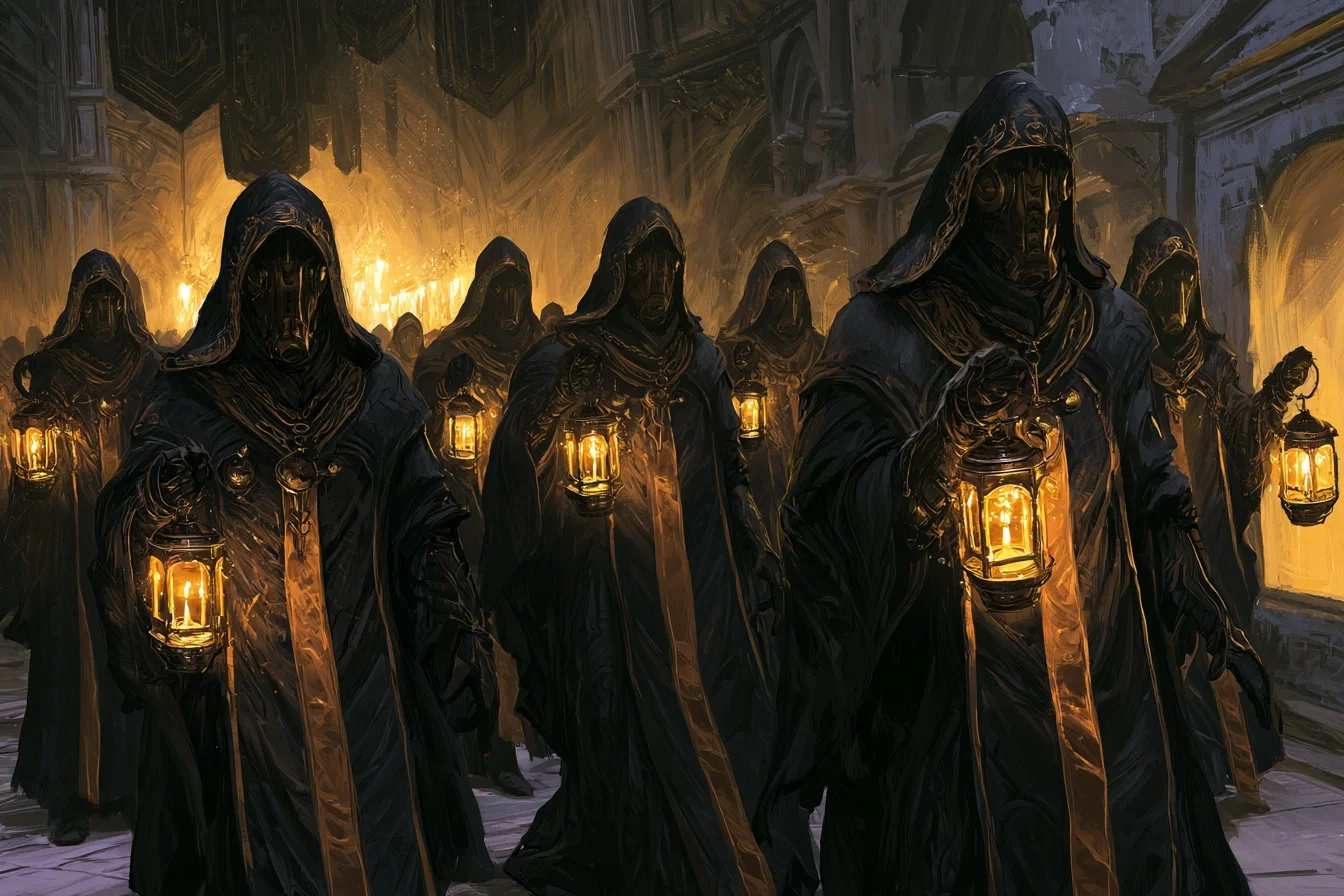
"The flame you carry from home is the only thing the dark cannot take from you.
But you have to choose to keep holding it."— Seravane, Founder of the Covenant of the Held Flame
A dimension that pulls people from other worlds without warning or reason. Named by the first refugees who tried to make sense of where they were — a compound word from several origin languages meaning roughly the place of grief and falling. The name stuck before anyone decided to make peace with it.
Mourne for the grief. Fell for the landscape, the nature of the place, and the falling that brought everyone here.
MourneFell is structured as an inverted tower: seven levels descending from the uppermost, where Varenholm stands, to the bottom, where something waits. Going down is easy. Coming back up is not.
At the bottom of MourneFell — so the rumour goes — there is something that can send you home. This belief is the central organising force of the dimension's social structure. It is why people descend. It is why the Covenant was founded to argue against it. It is why the Warden Council funds unsanctioned expeditions in secret.
Nobody who has reached the bottom has returned with confirmation. Some have returned changed. Some have not returned at all. The rumour persists anyway, which is itself worth thinking about.
Going down is easy. Going back up is not. This is not simply a matter of physical difficulty — the dimension itself seems to favour downward movement. Those who have descended and returned describe the climb back as fighting something that isn't quite gravity but functions like it.
The practical consequence: anyone who begins a descent must make peace with the possibility that they cannot reverse it. Every step down is a wager. The deeper you go, the worse the odds of the return journey — and the more you change, the less the climb back up seems to matter to you.
Named by the first refugees — a compound from several origin languages meaning roughly the place we held. Nobody agrees on the exact etymology anymore. Inheritors say the name with pride. Visitors say it with whatever they have left after grief: gratitude, resentment, or exhausted acceptance.
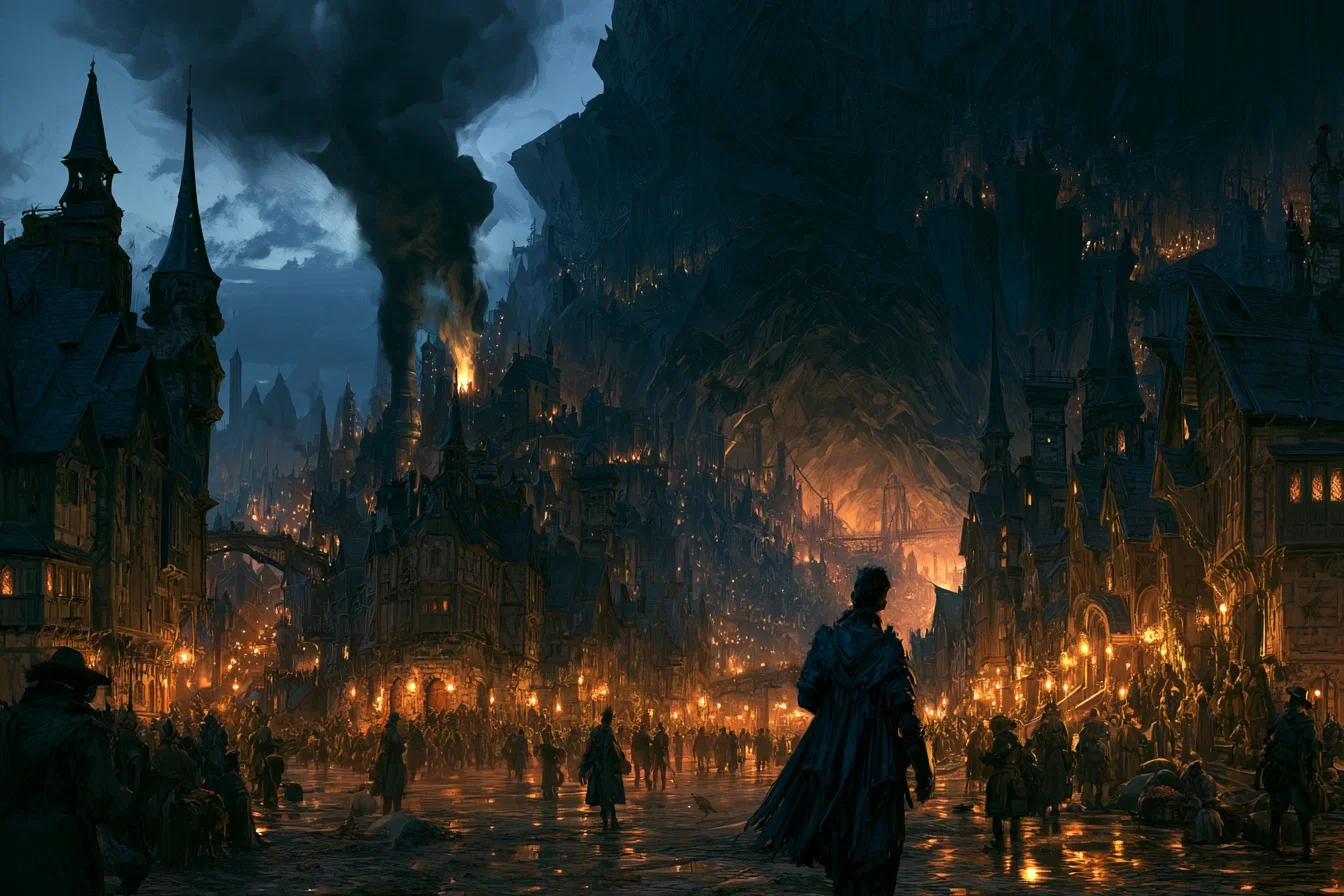
Built into dimension-stone that couldn't be demolished — dark geometry that doesn't resolve correctly when looked at straight on. Refugees built between it, over it, through it. Narrow streets collapse into grand plazas without warning. Useless staircases became landmarks. Every building shows its seams: original dimension-stone against timber, brick, salvaged iron. Light is gas and whatever the Fell produces naturally — fungi, certain stones, things that used to be other things. Always amber. Always slightly insufficient. Residents stopped noticing.
Loud, crowded, functional in the way places are functional when the alternative is death. Markets run through the widest streets — salvage, food from subterranean farms, goods from visitors who arrived with something worth trading. Coal smoke, damp stone, a dozen cuisines within fifty feet of each other. Fortification work runs as constant background noise. Residents have learned to read its rhythm. A change in pace means something. Nobody says what out loud. The Covenant's buildings are the only structures that look maintained. Everything else wears its age openly.
Two cultures share the same streets without sharing the same city. Visitors and Inheritors eat together, work together, intermarry — and produce a specific silence when descent comes up, or property, or how long someone has been here. Visitors maintain their own gathering spaces: certain taverns, certain market corners, not secret, just understood as places where origin-world grief isn't a social problem. Inheritors don't enter them. Inheritor civic pride becomes territorial the moment Varenholm's permanence is questioned. They built this city. That it was built on visitor labor and loss is history they honor in monuments and resist in policy.
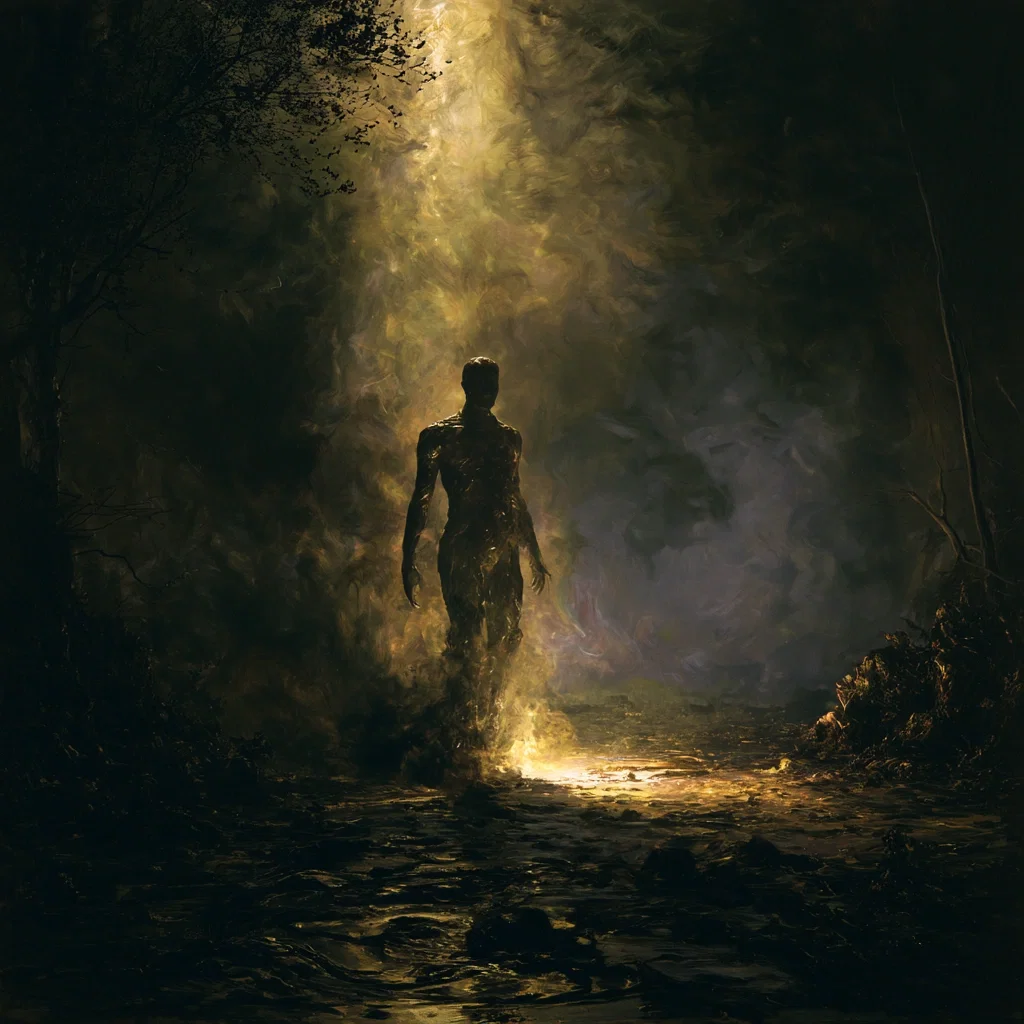
Founded by Seravane — an Inheritor, daughter of two visitors from different worlds — who claimed to have descended three levels and returned. Nobody believed her. She came back with burn scars across both palms she never explained, and one conviction:
She didn't mean fire. She meant selfhood — identity, memory, the particular shape of who you are.
The Covenant runs Varenholm's hospitals, orphanages, and food distribution. More importantly, it maintains the Ledger — a record of every visitor's name, face, and origin world. Having your name in the Ledger means you exist in Varenholm. Not having it means you're outside the social contract entirely.
They administer the Descenders' Rite: part blessing, part legal transfer of property and debts, part structured conversation with a bishop assessing whether your reasons for descending are legitimate. They can't stop anyone from going. But withholding the Rite is a social mark you carry back up with you — if you come back.
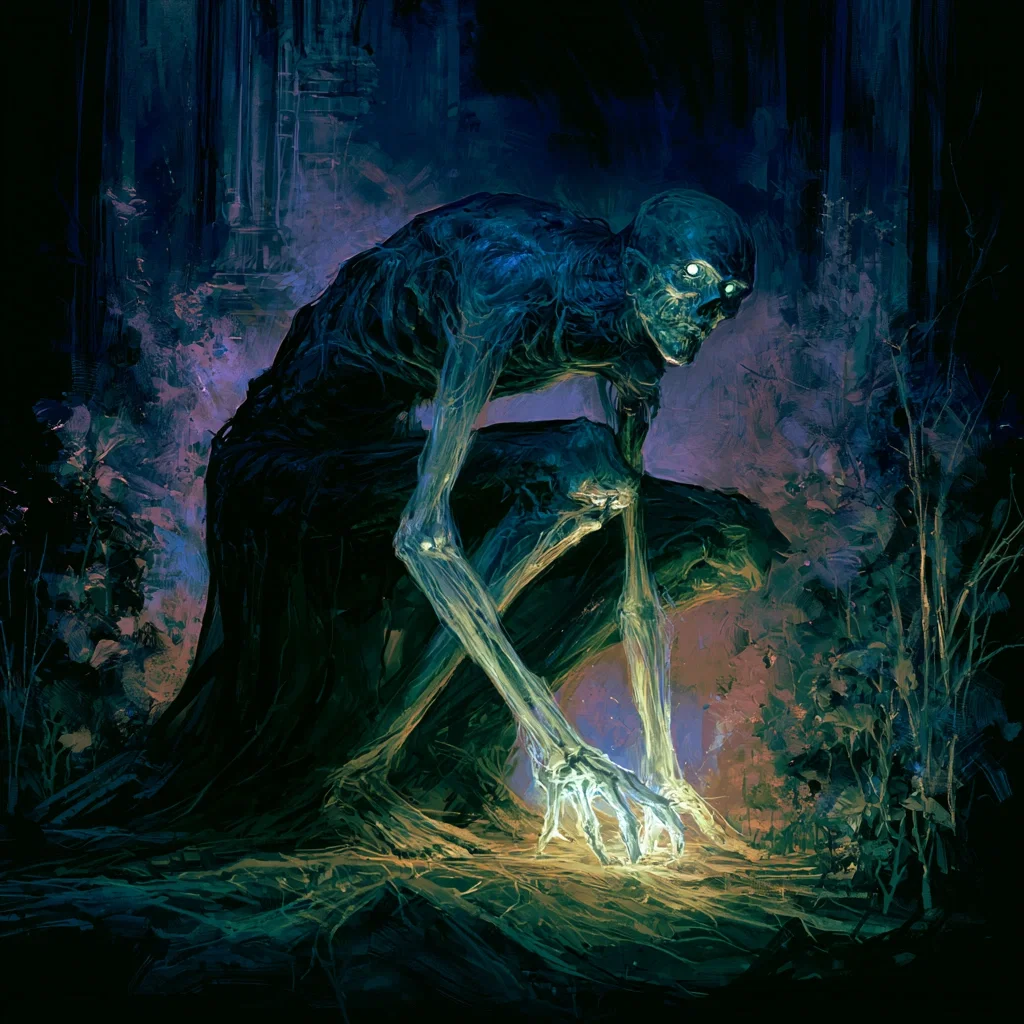
Transformation isn't something done to you. It's a choice made passively, every time you stop tending yourself. The things below aren't evil or damned. They are unattended. This is the faith's most devastating position — it refuses you the comfort of a monster. They're just people who let go.
The flame of home should be preserved for its own sake, not spent on the desire to return. Home is gone. Holding its memory is how you stay human. Spending it trying to claw back is how you go out. This puts the Covenant in permanent, quiet conflict with every visitor who still wants to leave.
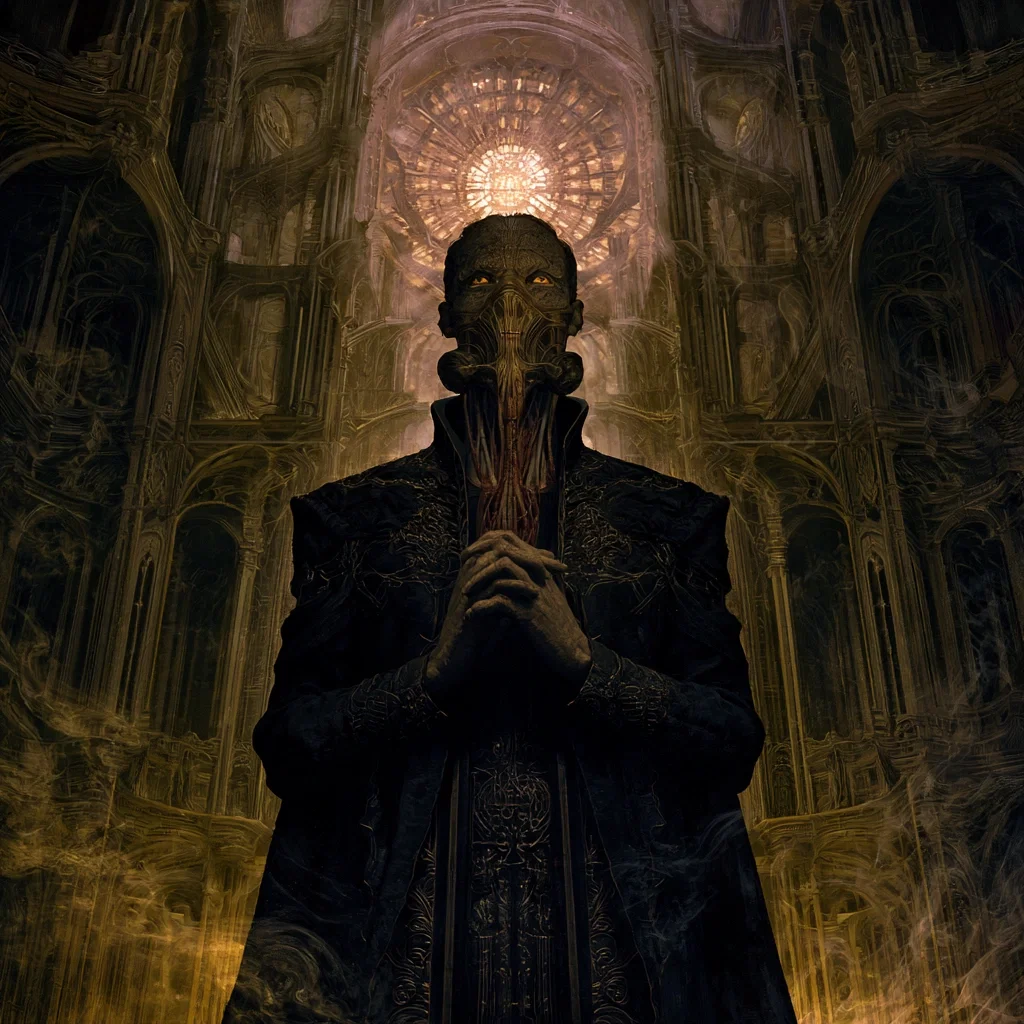
All Inheritors, by doctrine rather than tradition. Someone born here has no home flame to spend, making them more stable, less conflicted — better suited to keeping others anchored. Visitors can serve as Wardens, Lectors, or Archivists, but the episcopate is closed to them. The Covenant calls this protective. Visitors experience it as both that and something else.
Varenholm is governed by a council of seven Wardens, elected from both Inheritors and Visitors. In practice the split holds at five Inheritors to two Visitors — enough representation to claim fairness, not enough to change direction. The Council handles law, trade, the fortifications, and relations with the levels below. They have a complicated, dependent, mutually resentful relationship with the Covenant — the church has the social infrastructure and the loyalty of most citizens, the Council has the walls and the weapons. Neither can function without the other. They cooperate minimally and strategically.
The Grey Descent presents itself as a professional body for sanctioned exploration — they file Rite of Descent paperwork through the Covenant, maintain a charter with the Warden Council, publish expedition logs, and conduct themselves with the sober respectability of a surveying firm. Their sigil is a grey spiral on black, worn as a lapel pin.
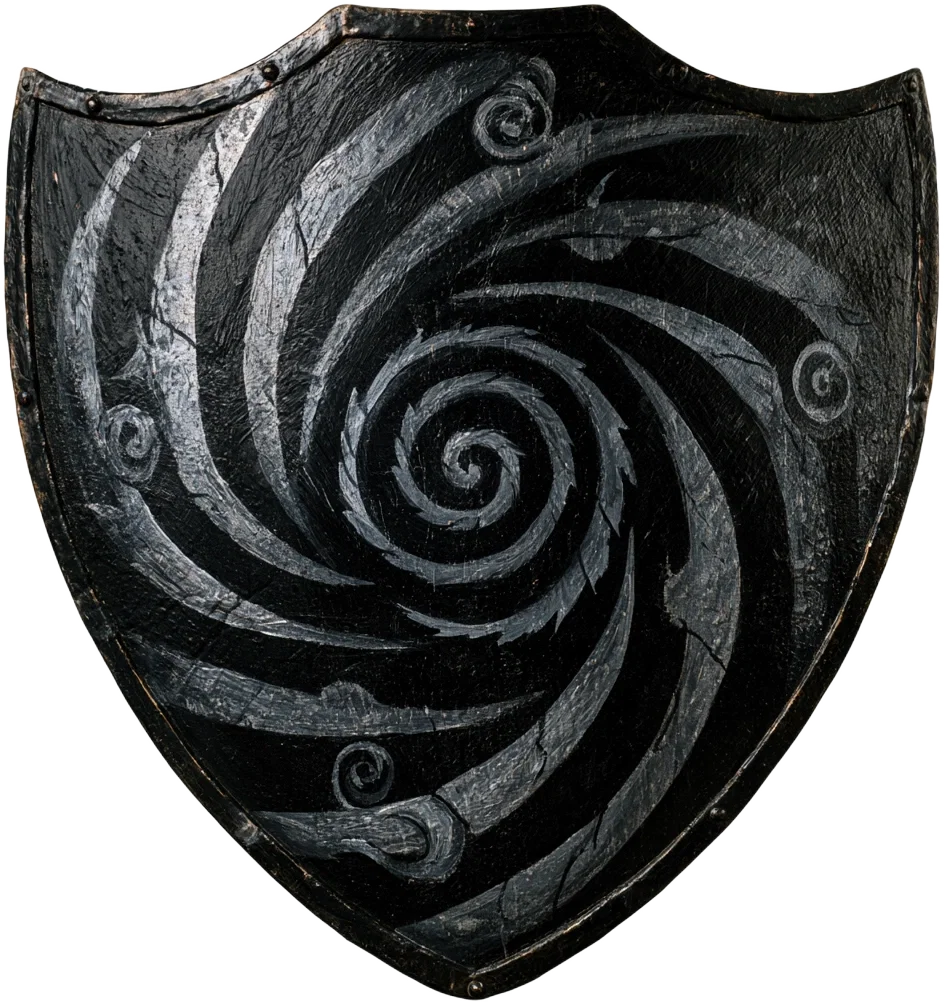
In practice, the Grey Descent operates a shadow economy built on descent. Every officially sanctioned expedition carries two or three additional agents who are not on the Rite paperwork. These runners descend independently, retrieve whatever the primary team marks on the way down, and surface through secondary access points the Guild has spent years mapping. The materials — dimension-stone samples, objects from the lower levels, accounts of what was seen — are sold privately before any Covenant assessment can be conducted.
The Guild does not recruit people who want to go home. They recruit people who are practical about the fact that they can't, and who would rather profit from the Fell than be consumed by it.
Run by a three-person directorate that rotates annually. The current effective head is Sevrin Aldecott, who holds the position of Expedition Comptroller — technically an administrative role. Nobody believes this.
The Covenant tolerates the Grey Descent because they need the expedition data the Guild provides. The Warden Council funds them quietly because the intelligence is useful. Neither institution has looked closely at the paperwork.
Inheritors = people that were born in Varenholm and did not 'arrive' in it.
Inheritors are Varenholm. It is the only world they have. They built its institutions, they named its streets, they developed its culture. They have a stability and a rootedness that most visitors quietly envy and occasionally resent. They don't carry the grief of displacement. They also don't carry its urgency, which means they have less sympathy for it than they think they do.
Inheritors are expected to be anchors — stable, civic, forward-looking. Ambition is respected when directed toward Varenholm itself. Descent is viewed with deep suspicion, bordering on social taboo. An Inheritor who descends is considered to be abandoning the only home they have. Some do it anyway, usually for reasons involving a visitor parent or partner. They are not spoken of warmly.
Visitors = people that have arrived to Varenholm by being displaced into this dimension from their home worlds, most by accident.
Visitors occupy a strange double position — they are welcomed, registered, cared for, and subtly managed. They are the reason Varenholm exists: the first generation of Inheritors' parents were all visitors, and that debt is acknowledged and spoken of often, usually when it's useful. Visitors bring skills, knowledge, and perspectives from their origin worlds, which makes them economically valuable. They also bring grief, urgency, and an unresolved desire to leave, which makes them socially volatile.
Visitors are expected to contribute and to adjust. Adjustment is a soft word for a hard expectation: you are expected to build a life here. You are expected to let go, eventually. Visitors who spend years visibly not letting go, who maintain origin-world customs aggressively, who openly advocate for descent, are tolerated but watched.
— Cannot own property outright — held in registered tenancy only
— Cannot vote in Warden Council elections
— Testimony in legal disputes formally weighted below an Inheritor's
The second-generation visitors — people born elsewhere who came here as children and have grown up Inheritor in all but legal status — are the most complex cases, caught between two incomplete identities, belonging fully to neither.

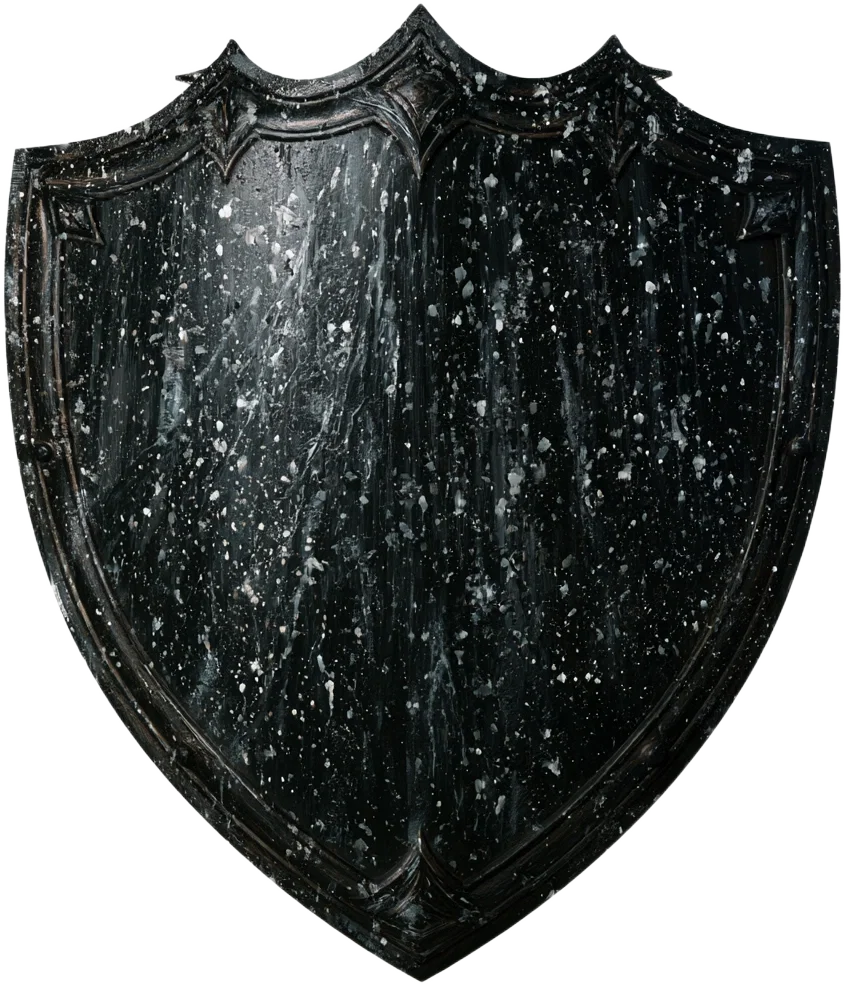
A grey ashfall on a field of deep black — flecks of white descending on dark ground, rendered in a loose vertical pattern. Simple enough that a child could reproduce it on a wall. Old enough that it appears carved into stonework throughout the civic quarter.
Edmond Ashfall, 71. Former senior Warden, served three terms before his health made a fourth untenable. Still attends every Council session from the observers' gallery. Nobody has told him to stop. Nobody intends to. He is deaf in one ear and pretends to be deaf in the other when it is useful.
Lenna Ashfall, Edmond's daughter, serves as Director of the Ledger Office — the institution responsible for registering arriving Visitors, maintaining their records, and processing Rite of Descent paperwork. Technically civic rather than ecclesiastical, which allows her more administrative independence than a Covenant appointment would permit. She has held the position for eleven years. Caswin Ashfall, Edmond's nephew, is the youngest sitting Warden on the current Council at 21. His granddaughter Vael is a Covenant Lector.
The oldest house in Varenholm by documented lineage. The Ashfalls were among the first refugees to survive long enough to build something permanent — their original claim covers what is now the civic quarter, and though much of the land has been sold, donated, or absorbed by the city over three generations, the name still carries the weight of origin. Other houses hold more current power. No house holds more symbolic legitimacy.
High. Not through wealth or force but through presence — Ashfalls have been in every major civic decision since the founding. The family produces civic servants the way some families produce merchants.

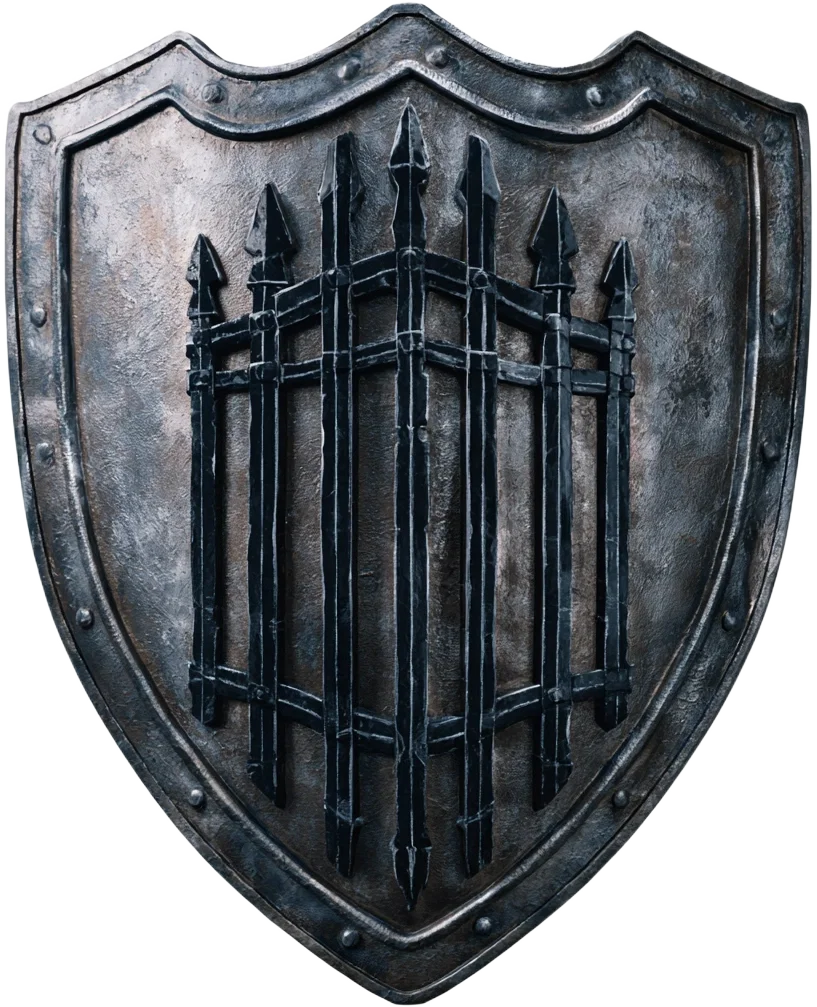
A closed iron gate on dark grey — two vertical bars and a horizontal crosspiece, rendered in flat black on a field of gunmetal. The gate was originally a reference to the fortifications. The family now reads it as a reference to access.
Hessine Aldecott, 66. Runs the family's contracting interests with the kind of precision that makes people assume she must be doing something wrong. She probably is, but nothing anyone has been able to document. Her handshake is firm. Her memory for names, favors owed, and slights received is considered by rivals to be her most dangerous quality.
The Aldecotts built Varenholm's fortification infrastructure across the second generation and have maintained the maintenance contracts ever since. Every wall expansion, gate repair, and reinforcement project in the last forty years has had Aldecott iron and Aldecott workers in it. The Council cannot build without them and has stopped pretending otherwise.
High and growing. The family's current reach into the Grey Descent through Hessine's son Sevrin represents a diversification that concerns the other founding houses, who still think of the Aldecotts as builders rather than operators. This is an error.

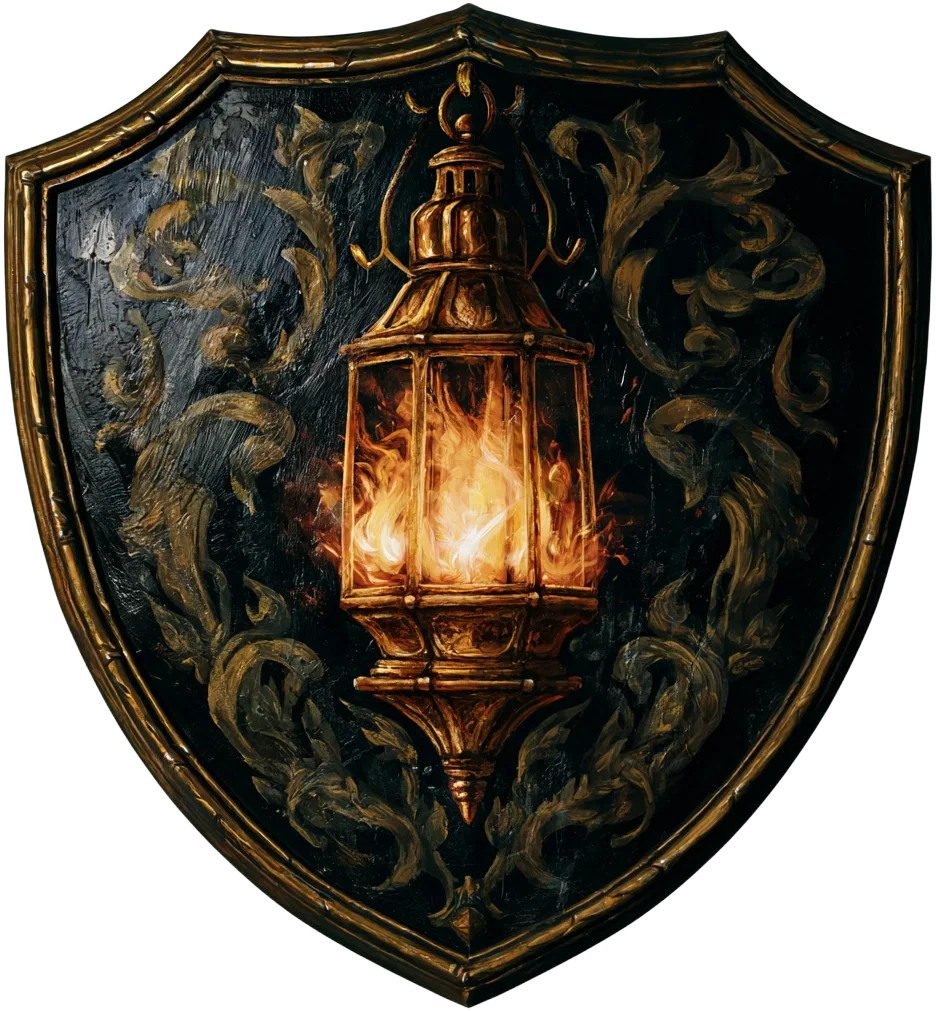
A single amber lantern on black — not the sealed Covenant lantern, an open one, flame visible. The Grenwicks were lighting the streets before the Covenant existed and have never let anyone forget it.
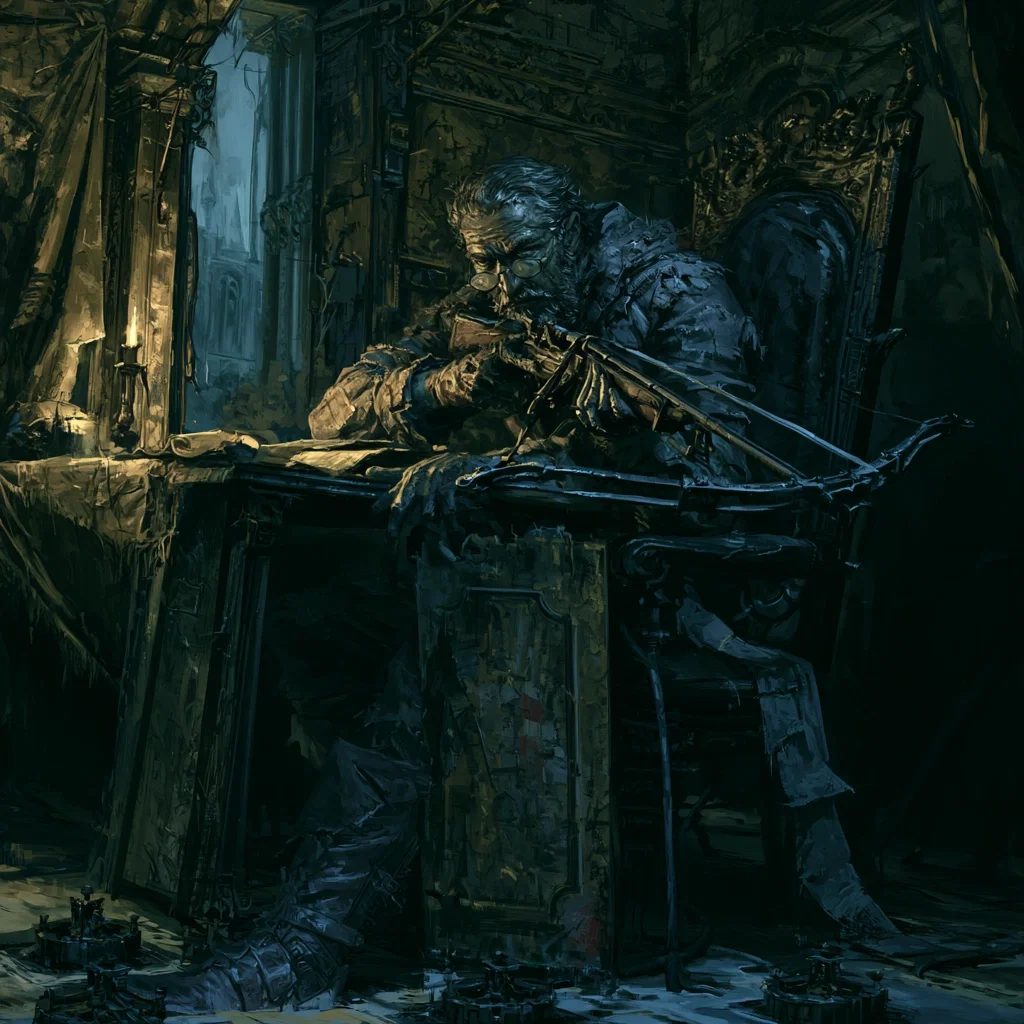
Osvar Grenwick, 74. Largely retired from active business, spends most of his time at the family's private table at the Coppergate Inn writing letters to people who would prefer he stop. He has outlived two rivals and one of his own children. He is not sentimental about either.
The Grenwick family controls Varenholm's gas supply infrastructure — the pipes, the lanterns, the maintenance contracts, the fuel import routes from the subterranean extraction points. In a city where amber gaslight is the only reliable illumination, this is not a minor position. They also own three of the city's most significant taverns and have a partial interest in the Coppergate Inn, which functions as Varenholm's unofficial neutral meeting ground for anyone who needs to speak without Covenant or Council witnesses.
Medium-high. Less civic prestige than Ashfall, less physical leverage than Aldecott, but the Grenwicks control information flow in a way neither of the other houses fully appreciates. Every significant private conversation in Varenholm happens under Grenwick light in a Grenwick establishment. Osvar has never mentioned this. He doesn't need to.

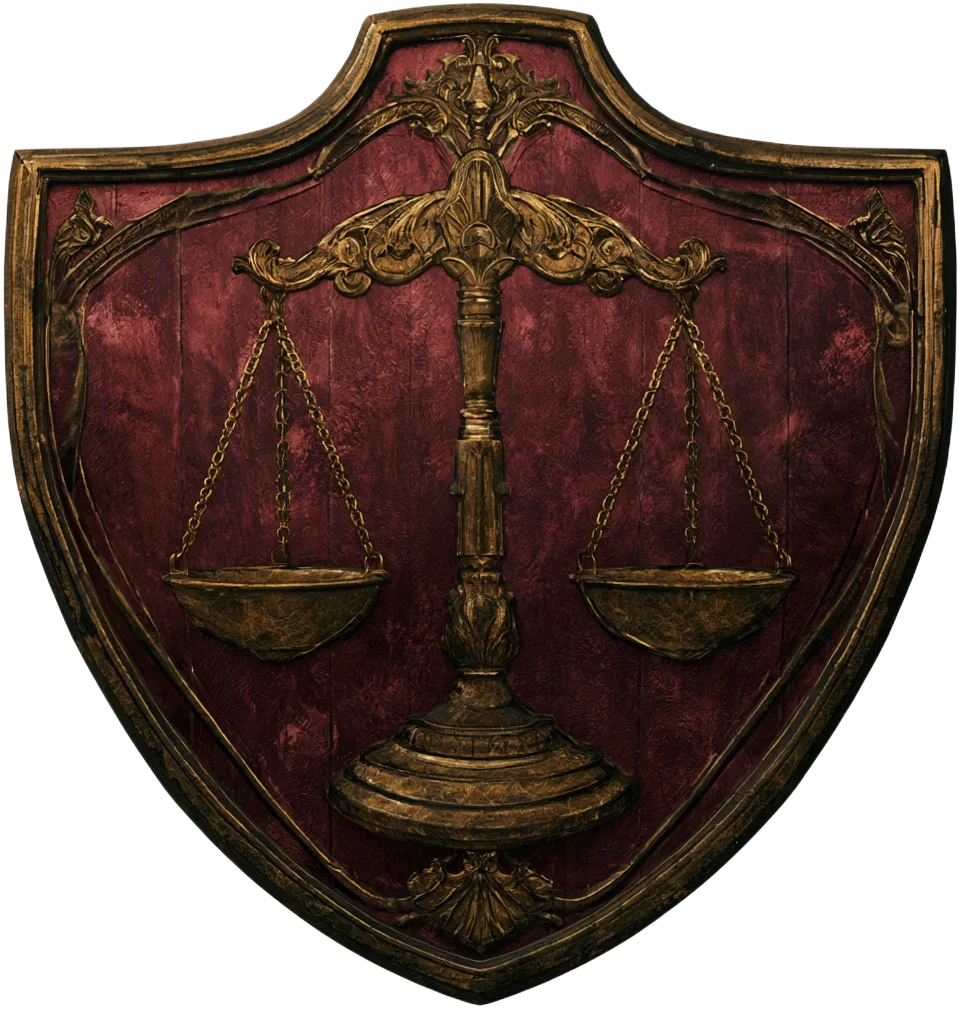
A set of brass scales on dark burgundy — one pan slightly lower than the other, never balanced. Whether this is intentional is a question Petra has never answered.
Petra Vask, 63. Arrived nineteen years ago with no property rights, no vote, and a precise knowledge of textile grading from a world that no longer exists for her. Spent her first three years on Aldecott warehouse contracts, the next three building her own import network through Visitors with useful skills, the following decade turning it into the most efficient dry-goods operation in Varenholm. Her two sons work the business. Her daughter is training to take it over.
Dry goods, salvage assessment, and specialty materials recovery — items arriving Visitors bring through that have value in Varenholm's economy but no local equivalent. Near-monopoly on assessing and brokering these, which puts Petra in a useful position relative to the Ledger intake process.
Medium. Grudgingly respected by the founding houses, who cannot ignore her volume. Quietly supported by the Visitor community, who treat the Company as proof the system can be navigated. Petra does not disagree, but she does not tell people what she had to compromise to navigate it.

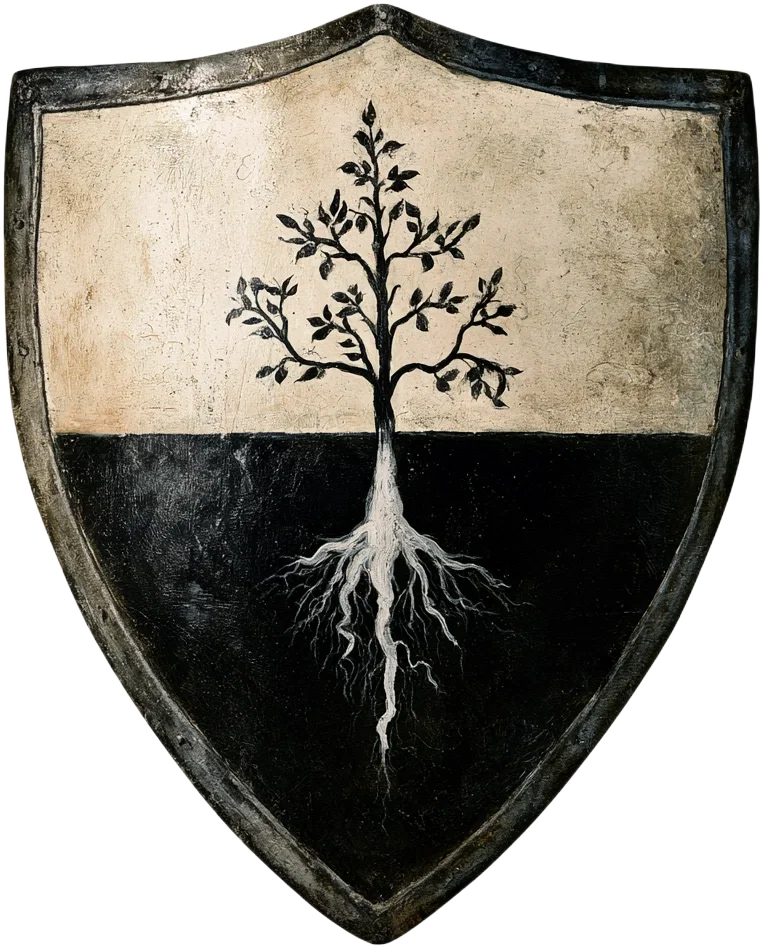
A white root on black soil, rendered as a simple vertical split — pale above the line, dark below. No text. Tern designed it himself on his first year's lease paperwork and it stuck.
Tern Halvorn, 69. Arrived with knowledge of growing in darkness — a skill from a world with a dying sun that turns out to be exactly what a subterranean farm city needs. Spent his first years on the city's existing growing operations, identified three practices killing yield by a quarter, corrected them without being asked, and was given a lease on a failing plot within the year. His wife Aldra manages the books. His son Caspar manages the workers. Tern walks the growing floors every morning and will tell you exactly what each plot needs before you finish asking.
Root vegetables, fungi, and protein crops for general supply. The Collective feeds approximately a third of Varenholm.
High in practice, unacknowledged in prestige. The Council cannot antagonize them and knows it. Several founding houses have spent years developing alternative supply chains without success. Tern is aware they are trying. He continues growing food.
Going down is easy. Coming back up is not. Every step of descent is a commitment, and the further you go, the less you resemble the person who started. What you find at the bottom depends entirely on what you are willing to become to reach it.
Close enough to Varenholm that people still come back. Far enough that some don't.
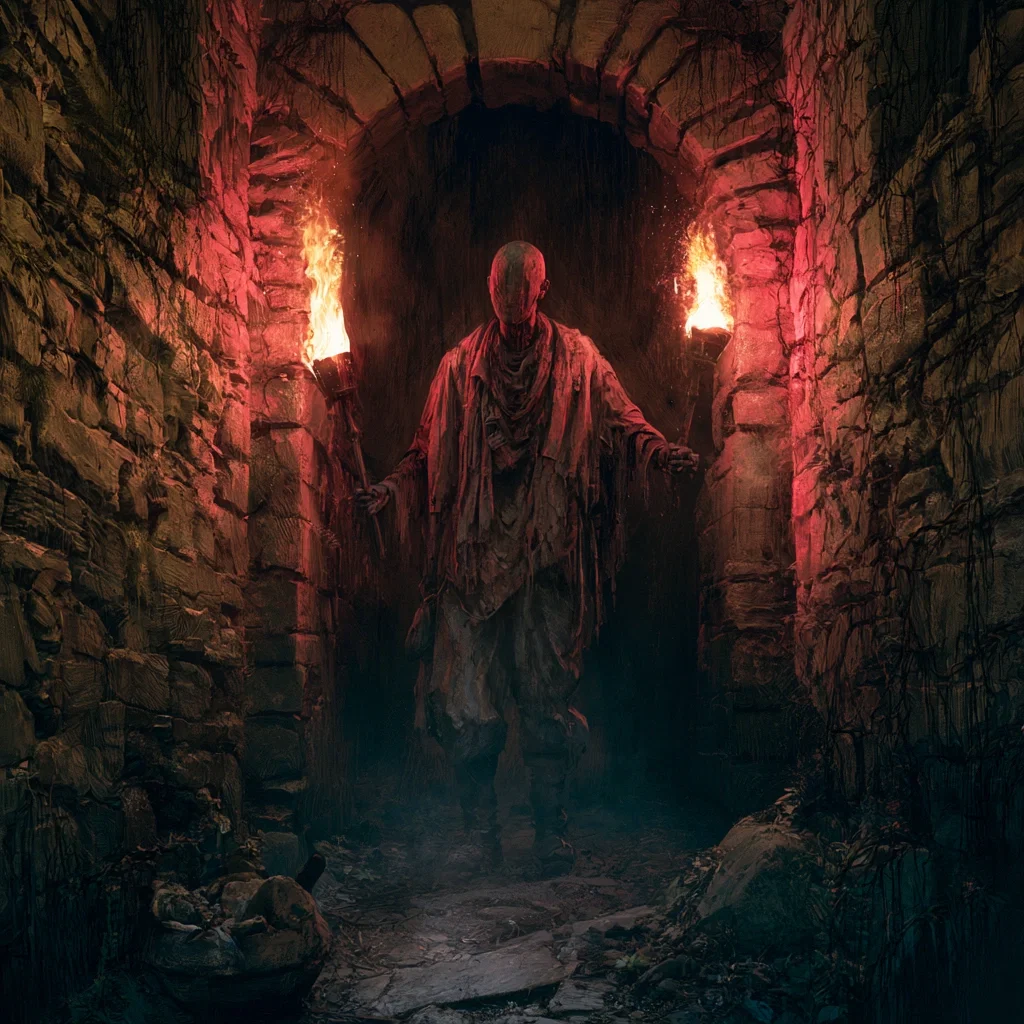
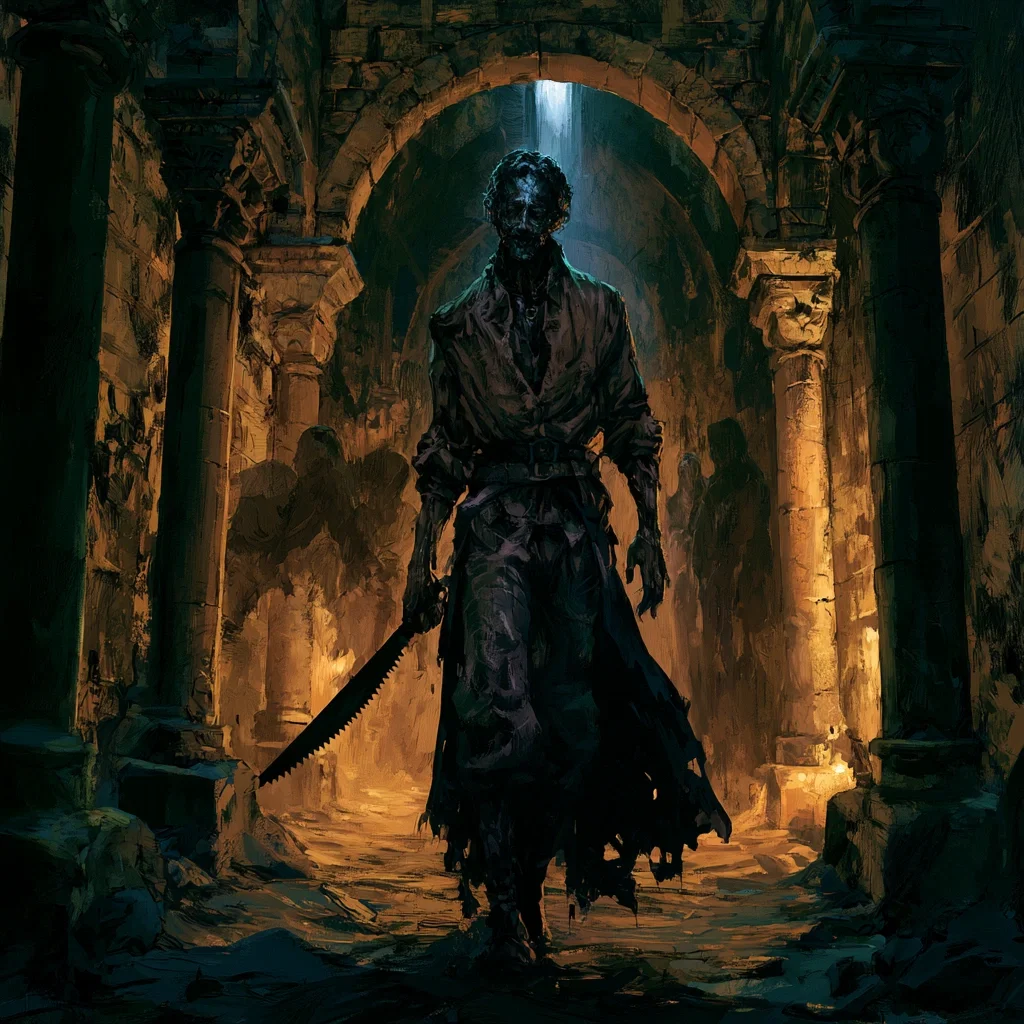
Standard stone corridors and chambers. Torches burn low and red. Cold, damp, with a faint rot underneath. Sound misbehaves — footsteps arrive before their source, voices come from empty rooms.


People here still have a self. They just can't remember why it matters.
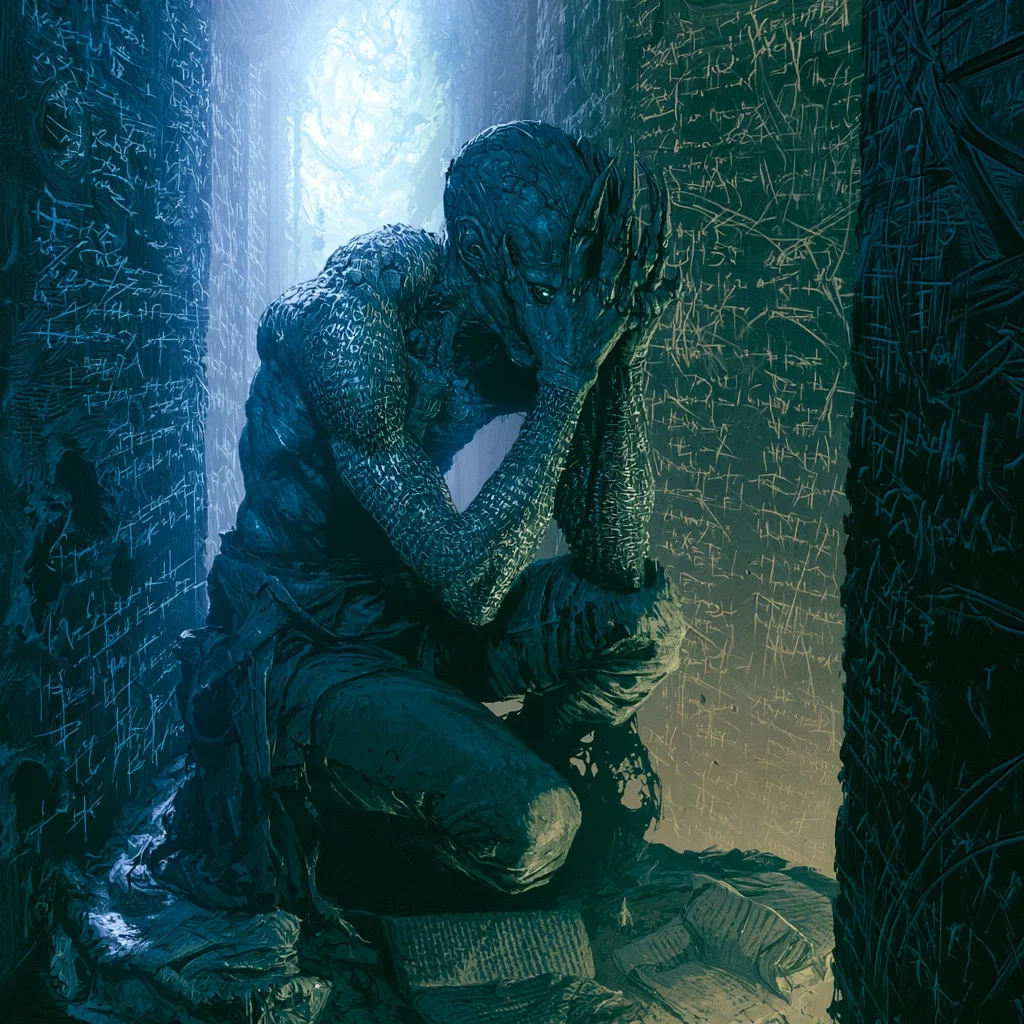
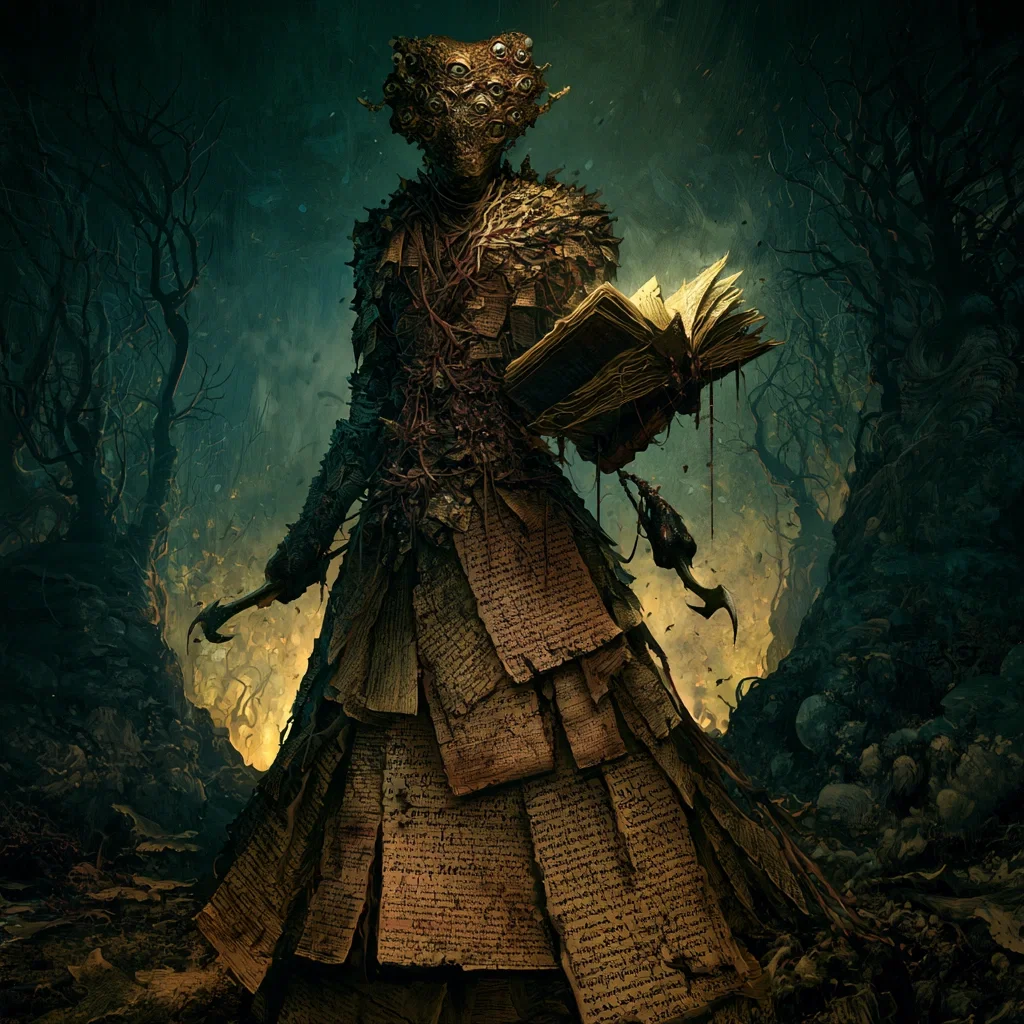
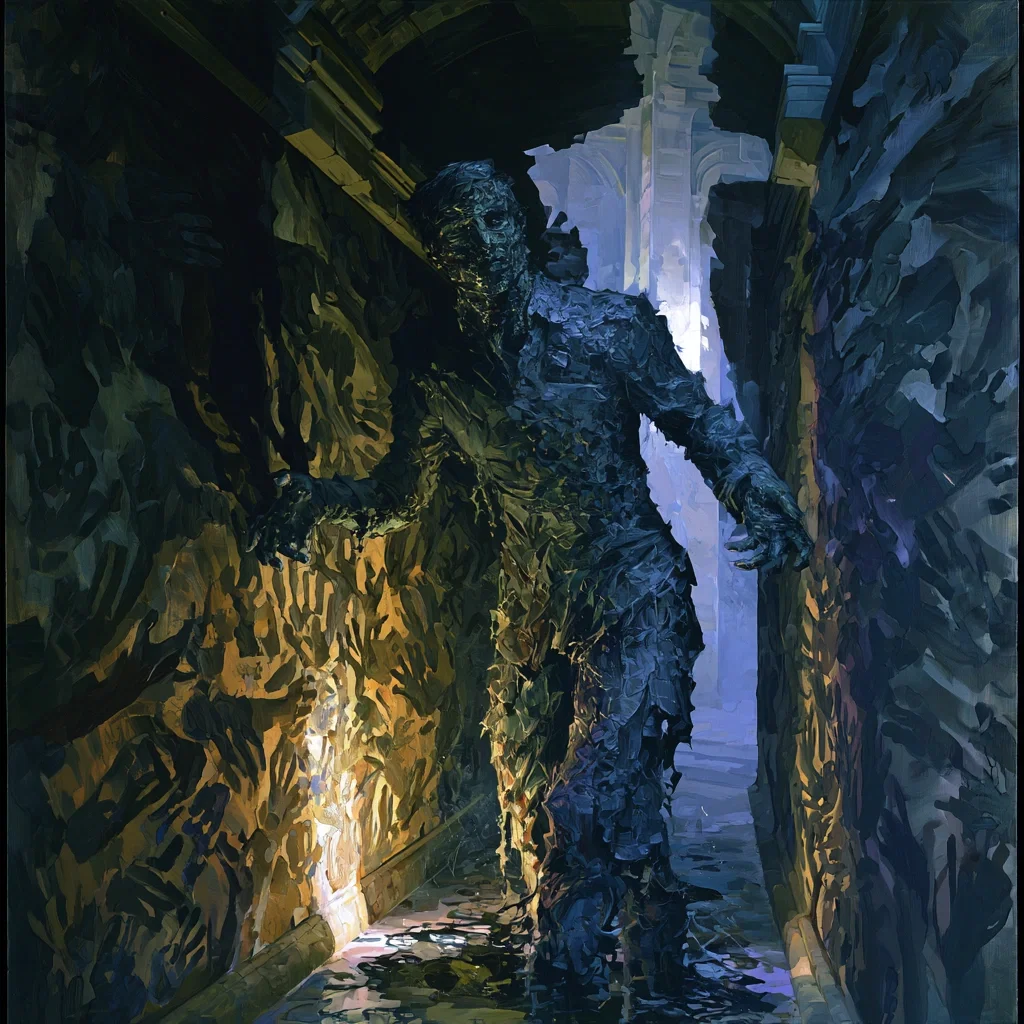
The architecture starts failing its own logic. Doors too small for the rooms behind them. Corridors that slope down while feeling level. Ceilings that are too high to see. The cold is deeper here — not weather, more like the absence of any memory of warmth. Surfaces are covered in scratched writing: names, dates, descriptions of faces. Nobody knows who made them. Everyone adds to them anyway.


They still know what they are. They have no way left to tell you.
The dimension stops pretending here. Rooms larger inside than their exteriors allow. Doorways that open onto spaces that shouldn't connect. Gravity works but has preferences — objects left alone migrate slowly toward certain walls. No ambient sound at all except a low constant pressure behind the ears that isn't quite noise. Every person who has been here long enough has stopped trying to speak. Not from despair. Because sound feels wrong here in a way that becomes physical after enough exposure.


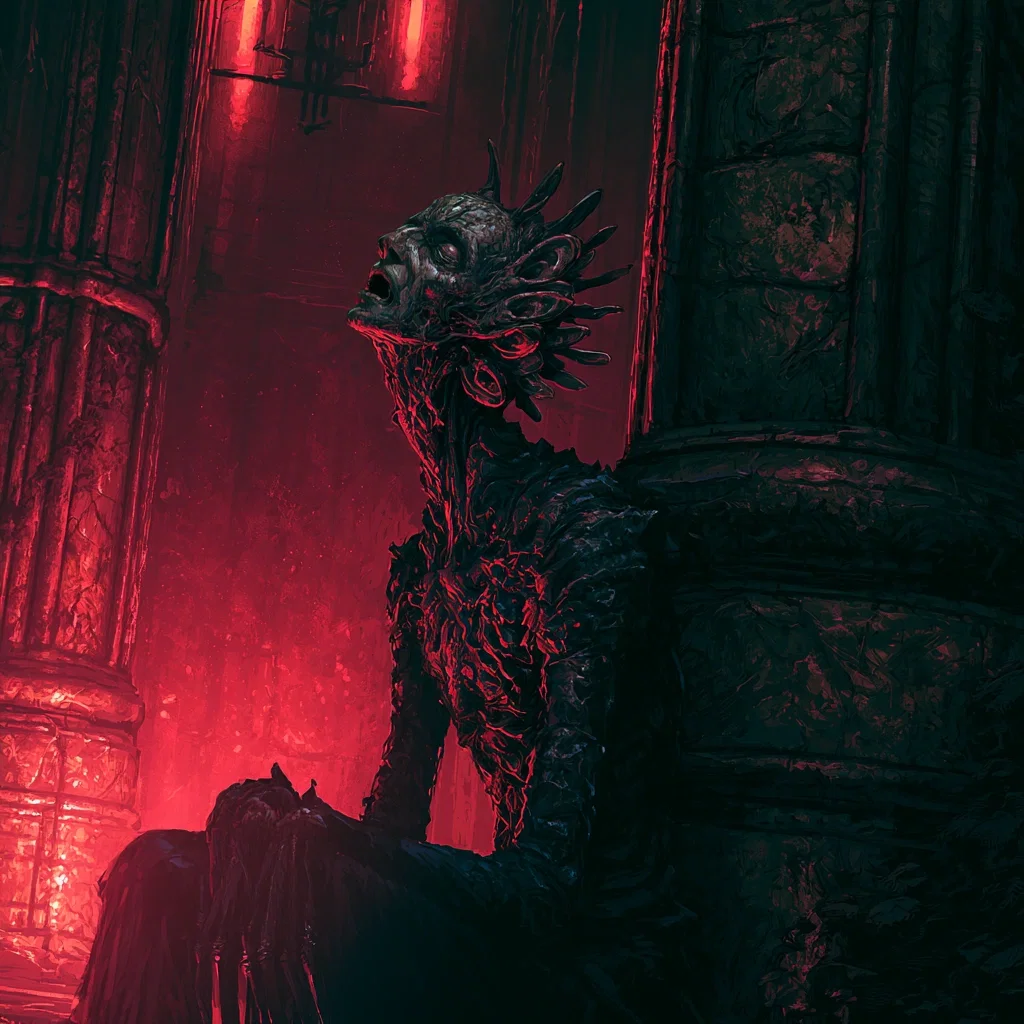
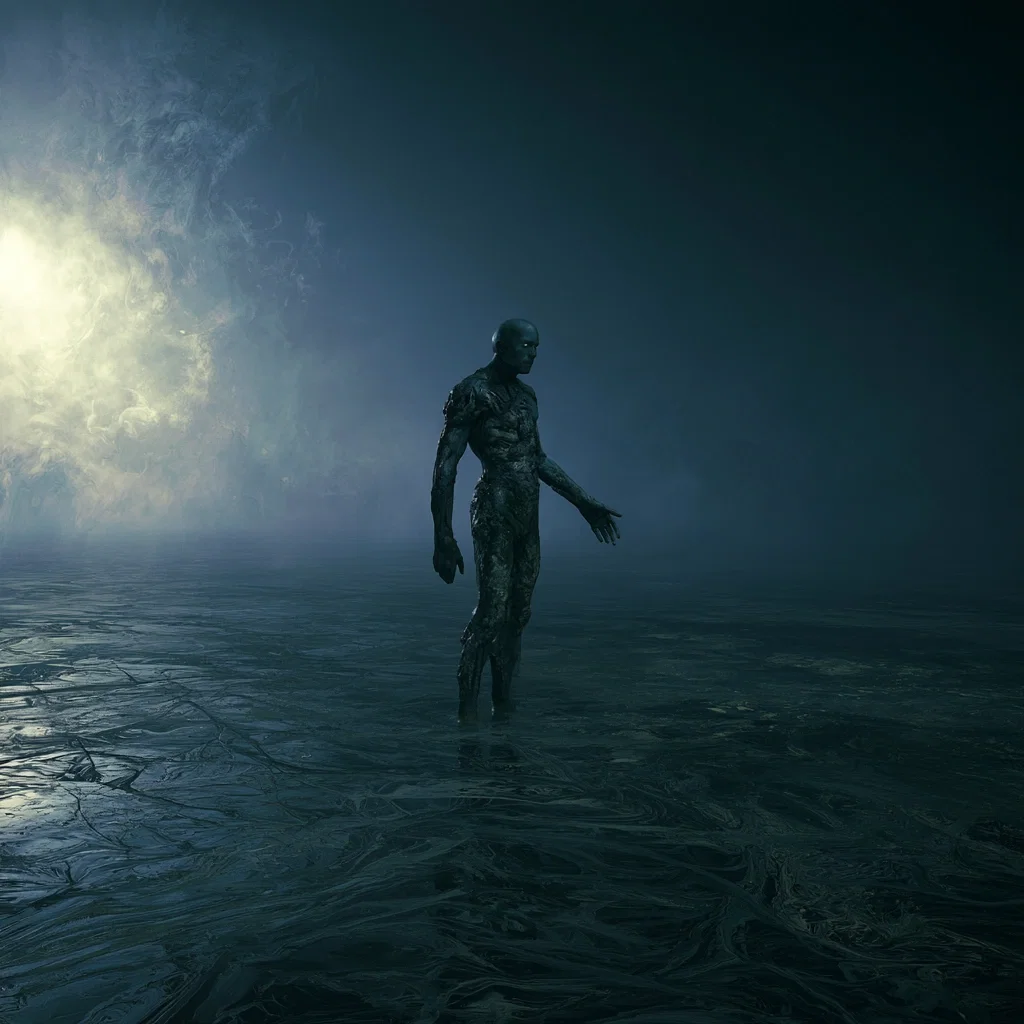
This is where people stop looking human. Not all at once. Piece by piece, in ways they chose.
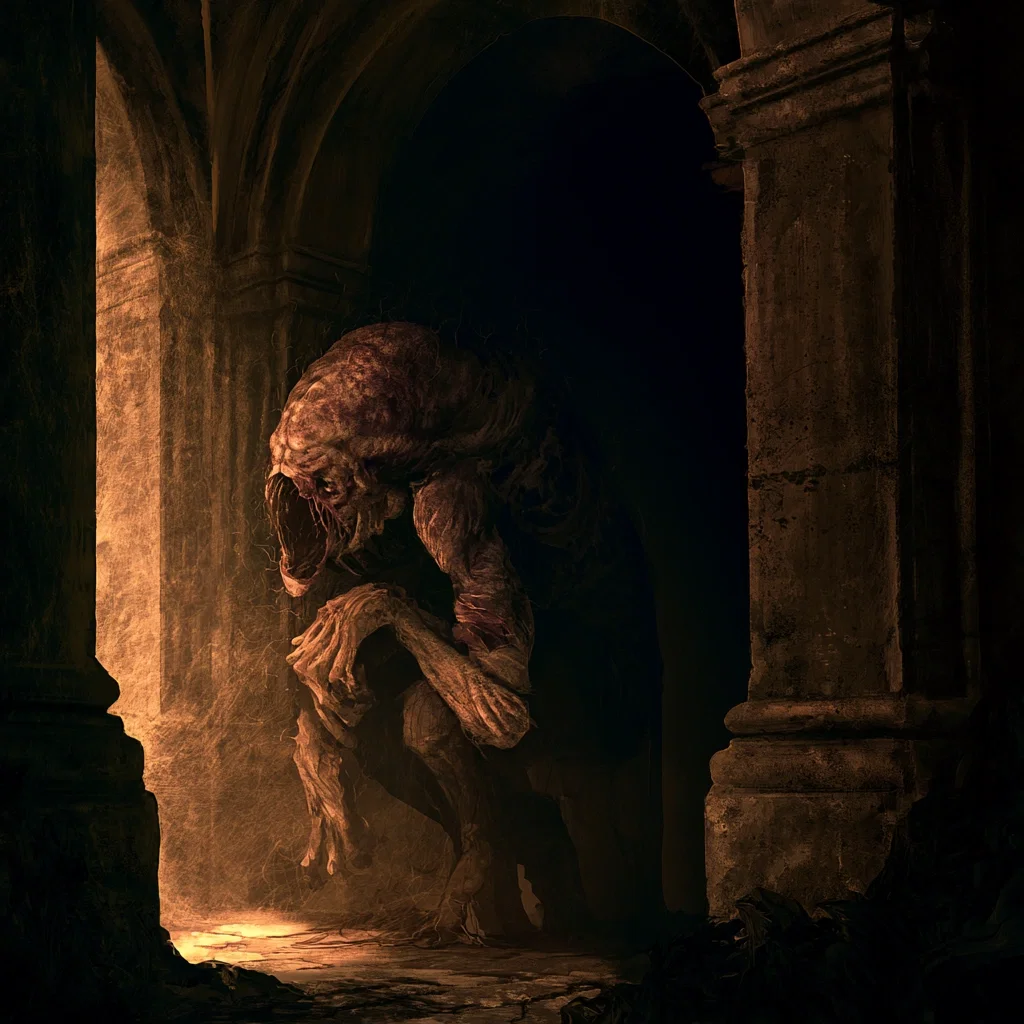
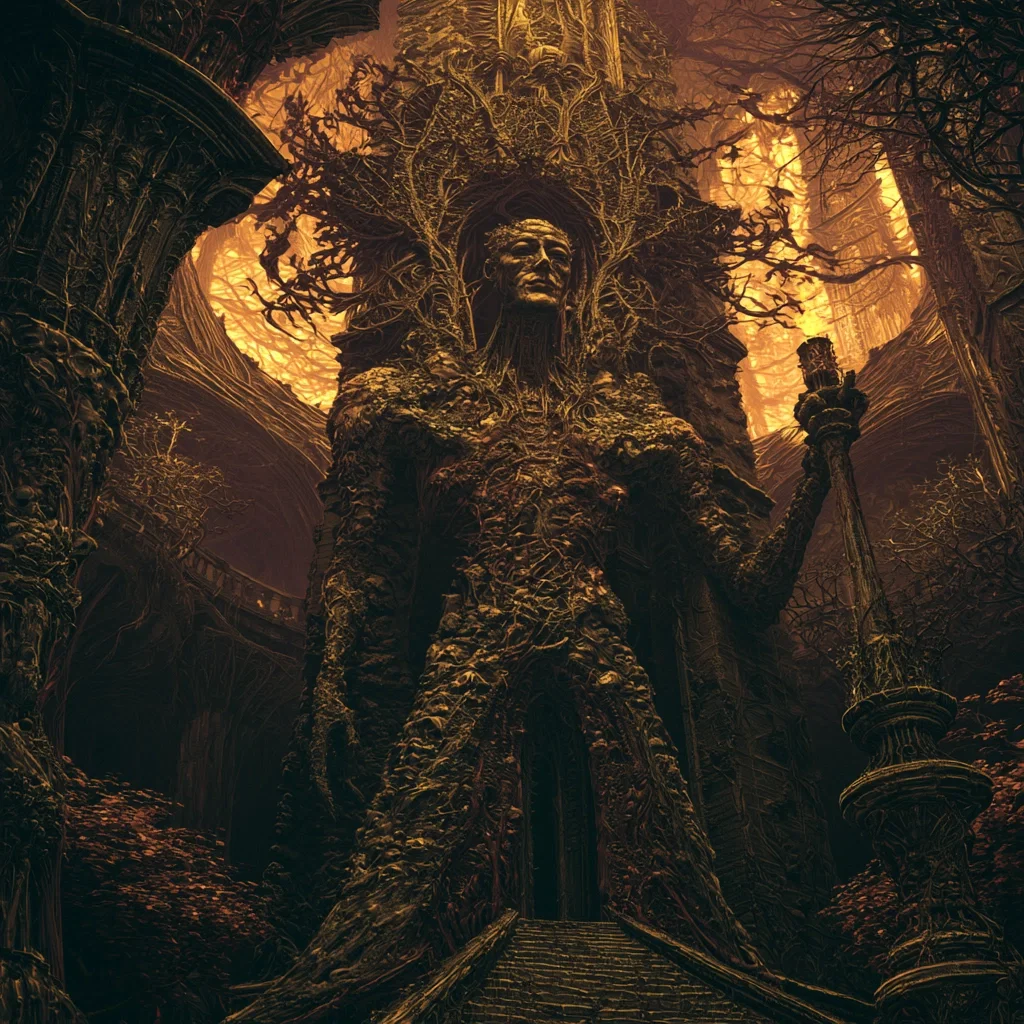
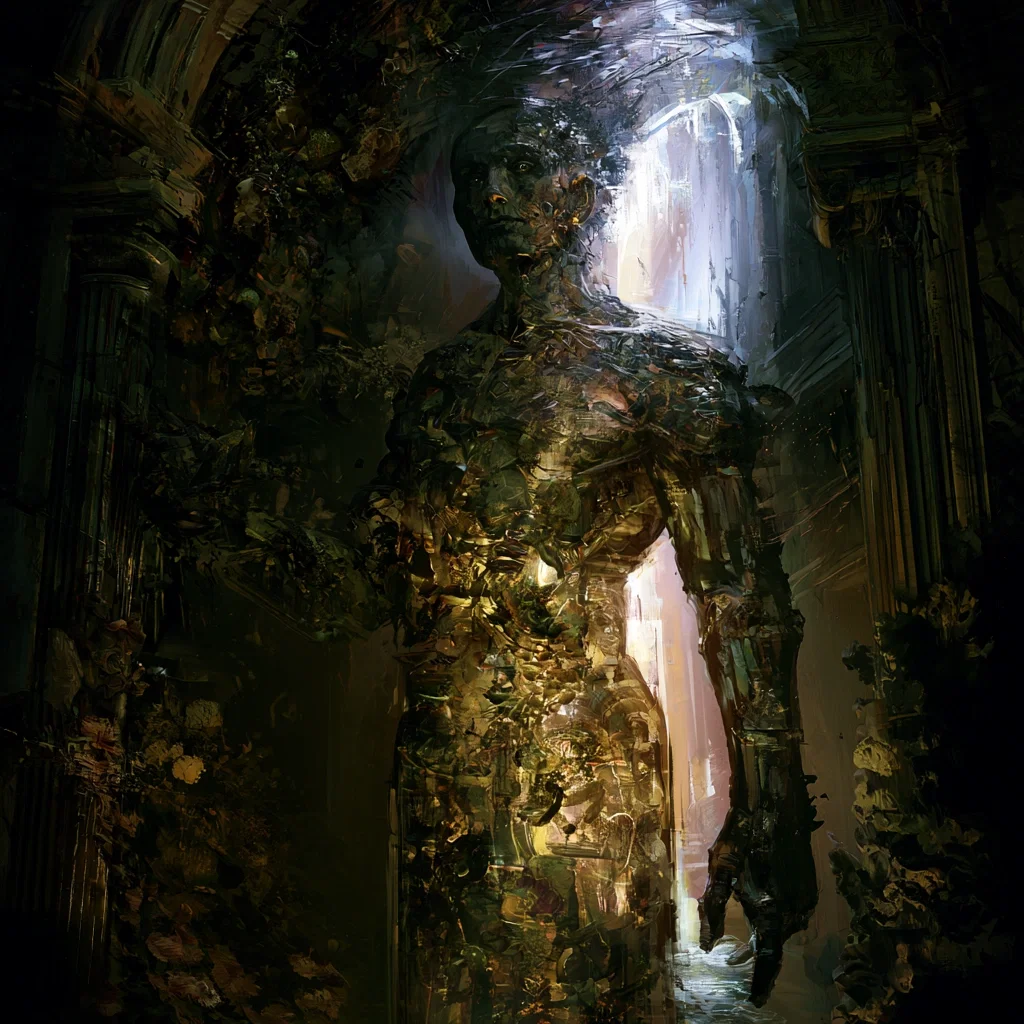
The architecture here isn't broken — it's been replaced. Walls of fused organic material, bone and stone grown together into load-bearing structures that were not built but produced. Ceilings drip a clear fluid that isn't water — contact with skin causes numbness lasting hours. Light comes from bioluminescent growths in pale blue and sickly yellow, casting everything in colors that make it hard to read depth and distance accurately. The air is warm and damp. It smells like the inside of a body. Every surface has give to it. Nothing here is fully inert.


Everything that made them dangerous as people. Nothing that made them human.
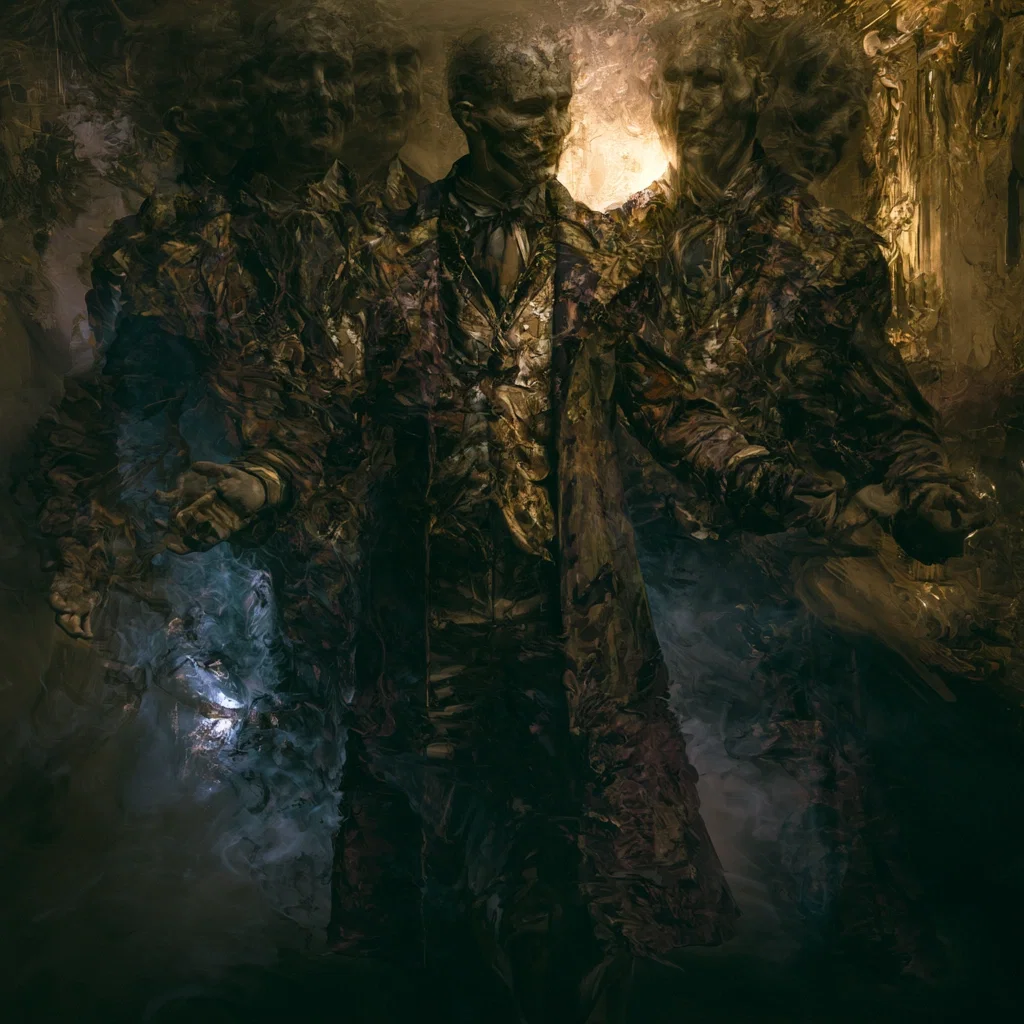
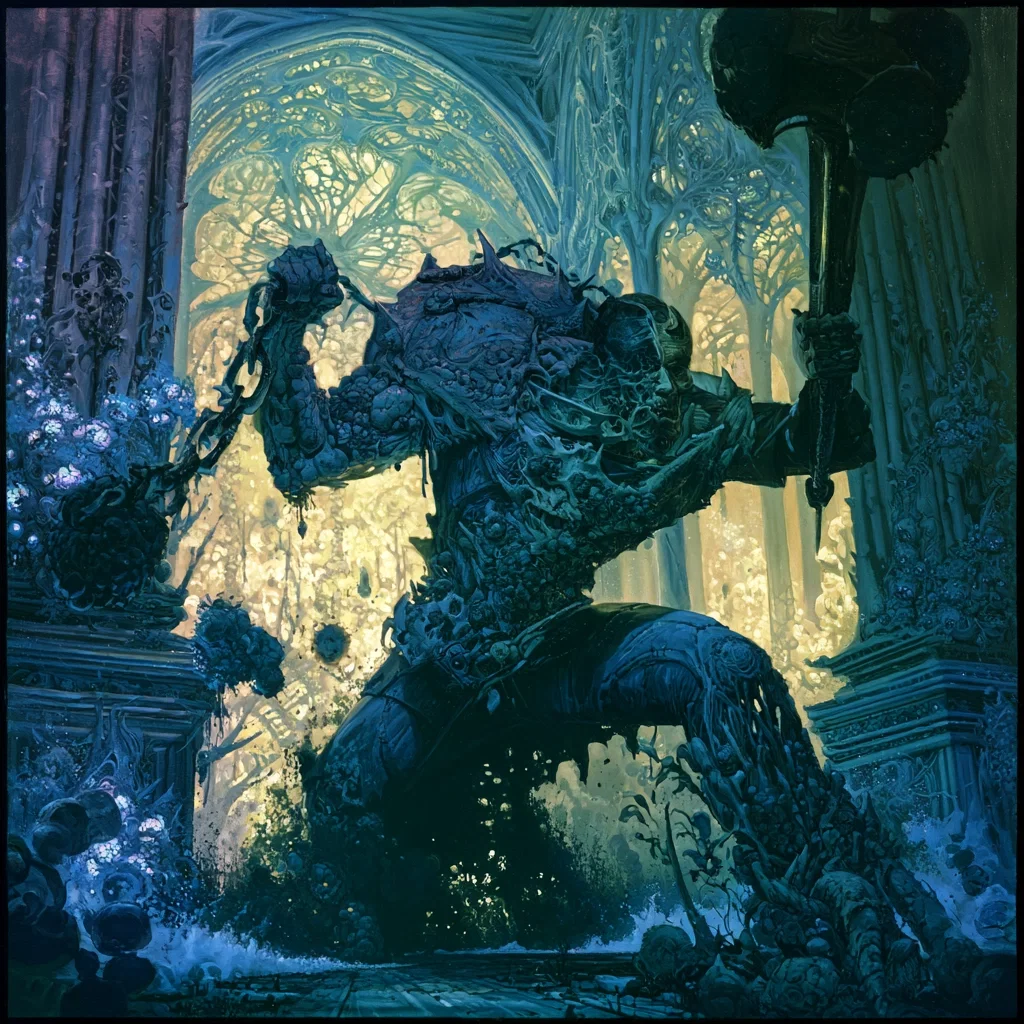
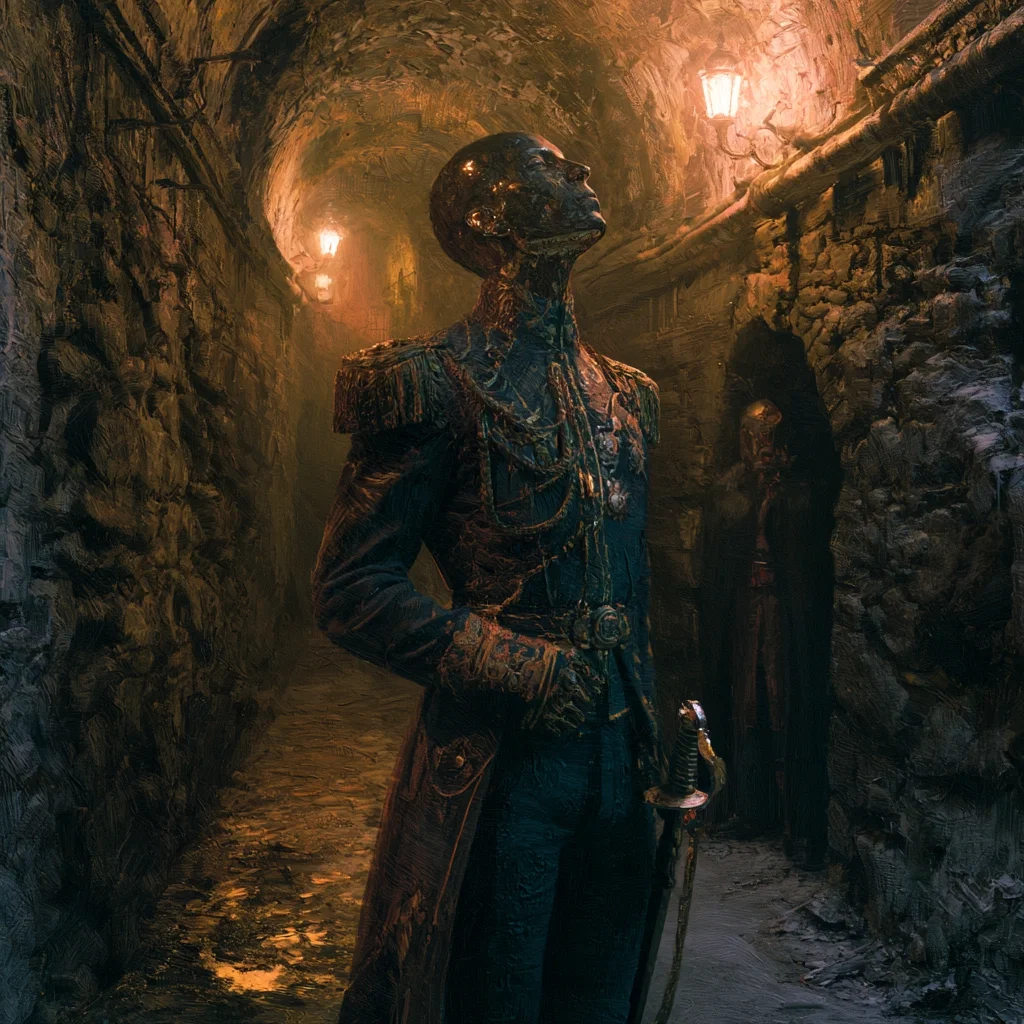
Someone organized this level. Corridors cleared, chambers arranged, structures built from salvaged materials. Looks almost like civilization until the details land — no communal spaces, every structure a single occupancy fortress. The level is a collection of sovereign territories with no diplomacy between them. Dry, stale air. No bioluminescence — inhabitants control their own light, positioned to illuminate approaches not interiors.


The body was the last thing they were certain of. Now they're not certain of that either.
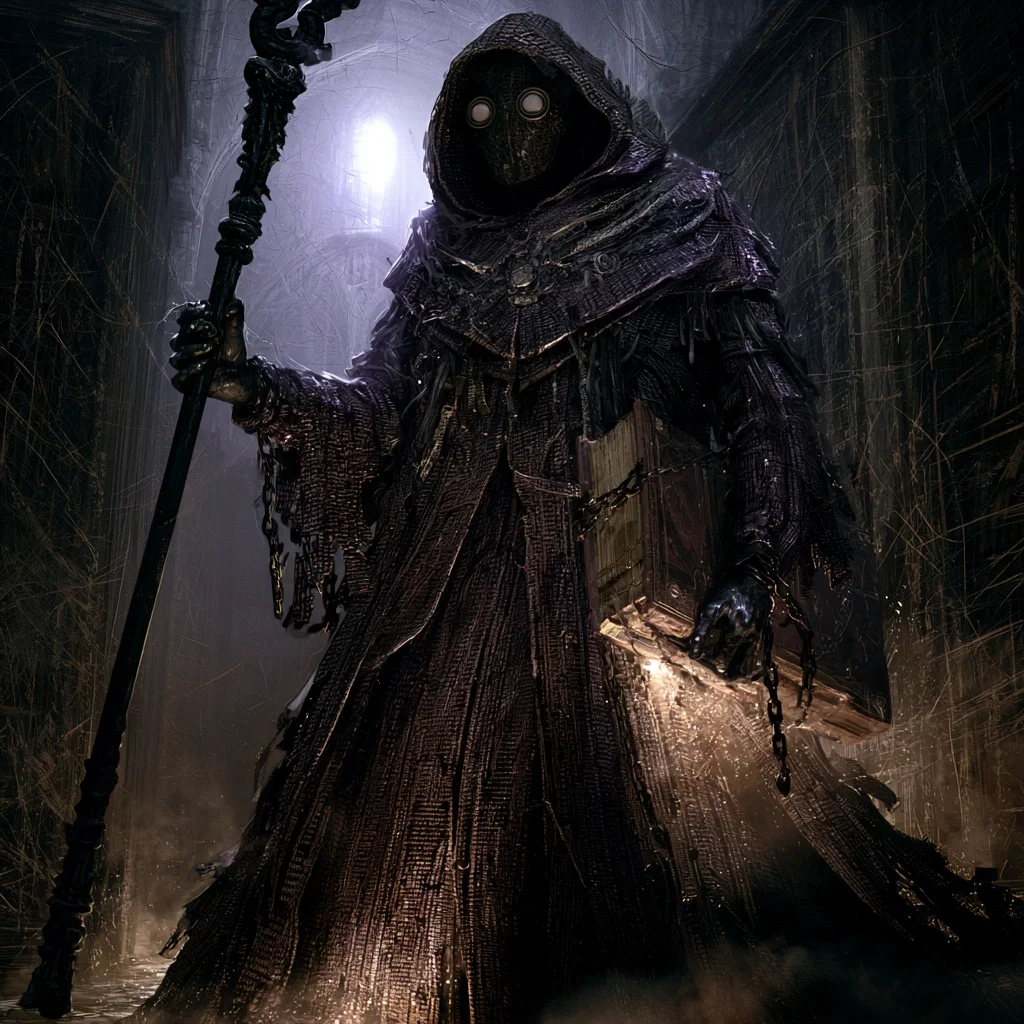
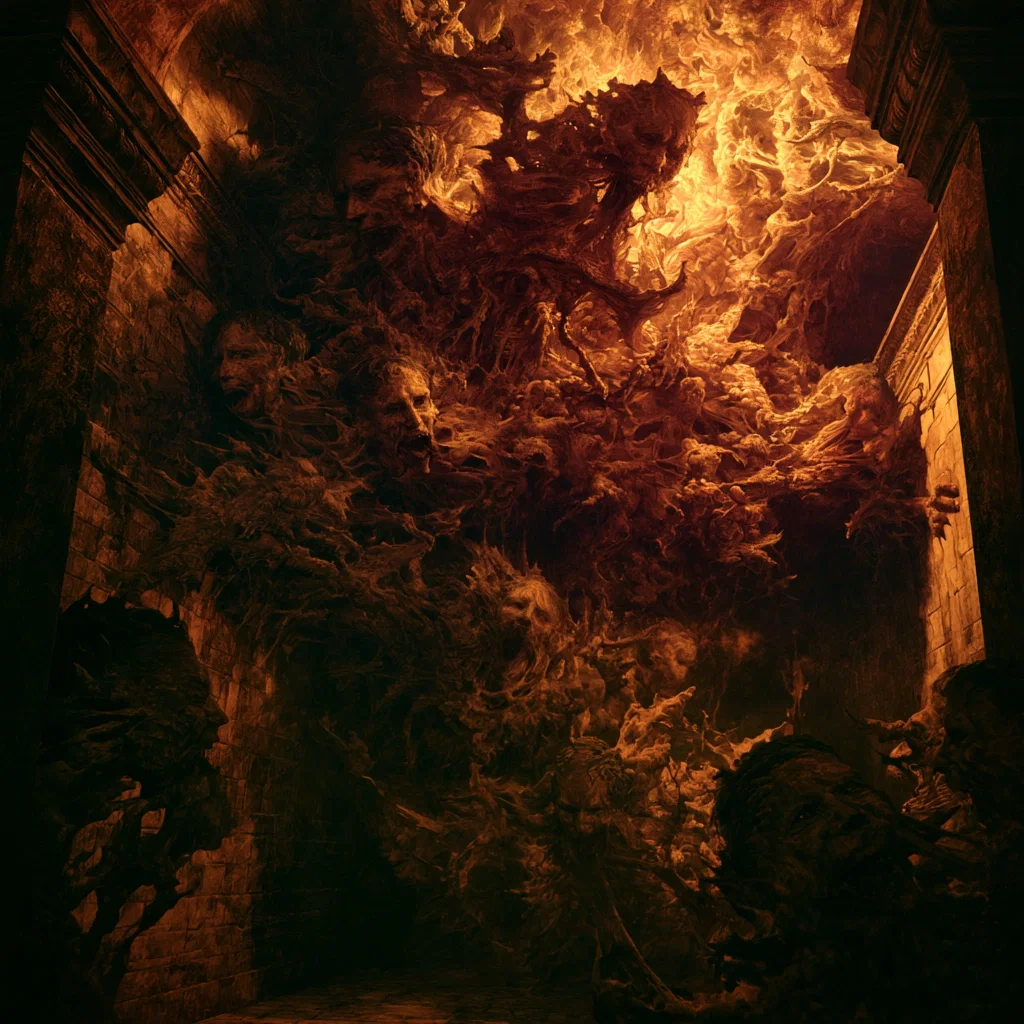
No consistent geography — return visits find corridors rearranged, new chambers, drops where floors were. Walls show handprints that sank in and stayed. Floor warm and slightly yielding underfoot. Air moves in patterns with no ventilation logic — currents that follow people, that reverse. Sections of wall occasionally become briefly translucent. Something moves inside the stone. Light doesn't land where geometry says it should.


Some knowledge should not be sought. Some doors should not be opened.
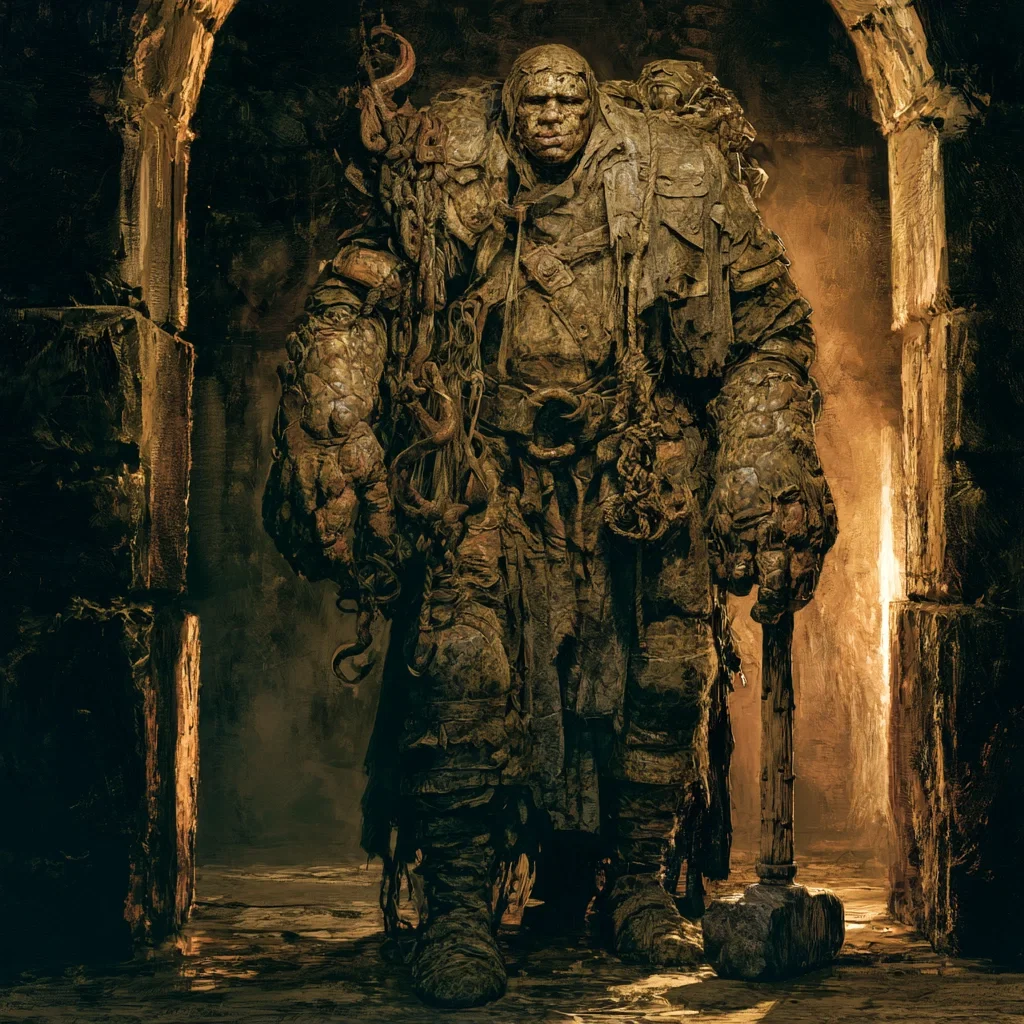
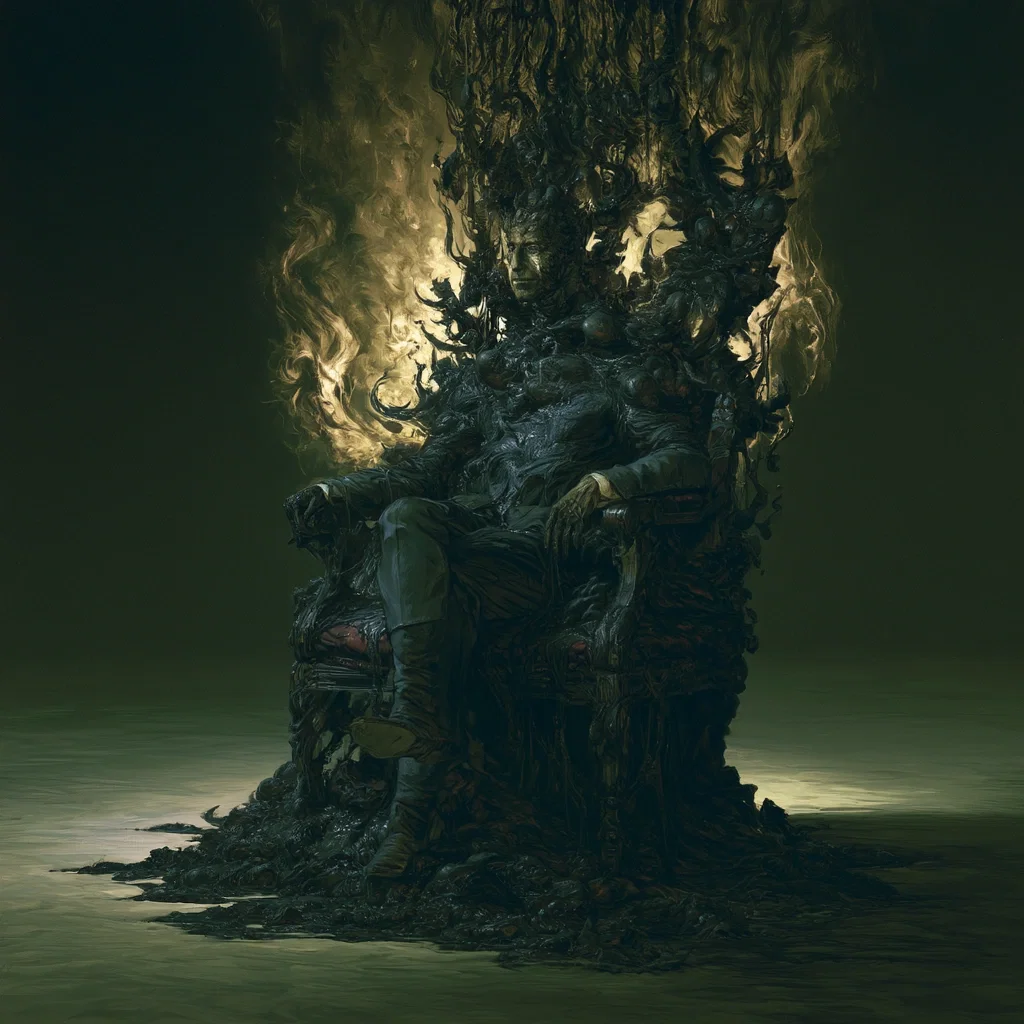
Open. After six levels of enclosure the bottom is a vast dark space — no visible ceiling, no far wall. Floor flat, dry, material unknown, rings hollow underfoot. Air still, neutral, no smell, no temperature. Sound works correctly here, which after six levels of distortion feels wrong. Dim sourceless light, no shadows. The things here are not hiding. They are not hunting. They occupy space the way furniture occupies space — until you get close.